
Canine fertility clinics
We’ve built up a comprehensive picture of the UK ‘canine fertility’ sector and some of its concerning practices. There are many self-styled ‘clinics’ operating with no veterinary involvement at all.
The seemingly respectable business with links to the illicit puppy trade. We’ve been investigating ‘canine fertility clinics’ (CFCs) since 2020. During the pandemic demand for puppies grew, and the number of canine fertility clinics exploded. So did the number of reports about canine fertility clinics to our Animal Crime Investigators.
Since then, we’ve built up a comprehensive picture of this sector and some of its concerning practices. There are ‘clinics’ operating with no veterinary involvement at all. Some are prescribing and using veterinary medicines illegally. And many are encouraging owners to breed flat-faced puppies with increasingly extreme features to the detriment of their life-long health and welfare.
Whilst there are some genuine veterinary specialists out there, there’s also plenty of unqualified people who are making lots of money selling fertility procedures to low-welfare breeders, who are pushing dogs used for breeding to their limit.
Explore this section
What are canine fertility clinics?
Canine fertility clinics are commercial businesses that provide assisted breeding services for dogs, such as artificial insemination, pregnancy scanning and ovulation testing.
Many of these businesses operating in the UK are not staffed by veterinary professionals, even though many of the procedures they provide (artificial insemination included) are legally defined as acts of veterinary surgery and can only be carried out by a registered vet or veterinary nurse.
They expanded rapidly during the COVID-19 pandemic, fuelled by illicit breeders looking to profit from the surge in demand for designer puppies, including breeds that struggle to mate and give birth naturally. While a small number of legitimate, veterinary-led fertility clinics do exist, many should not be operating at all and could be breaking the law.
Disturbing links
Perhaps most concerning of all are the links we discovered between canine fertility clinics and puppy farmers.
And we’re not the only ones who are worried. 98% of vet professionals told us they’re concerned about fertility clinics, too.
Want to know more?
The issues
We've found evidence that canine fertility clinics are:
- Allowing people with no veterinary training or supervision to carry out invasive procedures on dogs, including acts of veterinary surgery like artificial insemination and blood tests.
- Illegally supplying and administering prescription veterinary medicines and other controlled substances.
- Actively encouraging the selective breeding of flat-faced dogs to produce puppies with increasingly extreme features.
- Connected to unlicensed dog breeders and the illicit puppy trade.
- Claiming to have credentials they don’t to make their business appear trustworthy and legitimate.
In addition, there are low-welfare breeders carrying out DIY artificial insemination on their own dogs – despite it being a procedure only registered veterinary professionals can lawfully carry out in the UK.
What we're doing about it
We’ve made detailed recommendations to the Scottish Government as part of its plans to establish a canine fertility service licensing scheme.
We’ve given evidence about canine fertility clinics and dog breeding to DAERA’s Dog Breeding Review Panel in Northern Ireland.
We’ve raised awareness throughout the animal welfare, enforcement and political sectors with presentations and events, including a problem-solving workshop with the CFSG and a meeting in Parliament with APDAWG.
We’ve been the leading source of information and research about the sector in the UK.
Our evidence helped persuade the RCVS to strengthen its stance on canine artificial insemination. In 2023, the veterinary regulator confirmed this service can only be carried out by registered veterinary professionals and NOT lay people.
We now need your help
If you have concerns that someone is performing veterinary surgery illegally, report your concerns to the Royal College of Veterinary Surgeons via illegalpractice@rcvs.org.uk.
Consumer protection
Consumer protection issues can be reported to Trading Standards. Animal welfare issues connected with a canine fertility clinic can be reported to the RSPCA (England & Wales), SSPCA (Scotland), and USPCA (Northern Ireland).
You can also report your concerns to our Hotline4Pets.
Please note, registered veterinary professionals can break client confidentiality if they consider that animal welfare or the public interest is being compromised. See the RCVS Code of Conduct for more information.
Veterinary care
If you need to access veterinary care, use the RCVS’s Find a Vet website to find a registered veterinary practice and registered veterinary professionals. Do not accept veterinary care and advice from unqualified people.
Considering getting a puppy or dog?
If you’re considering getting a puppy or dog, make sure you use a reputable source. This will help you to avoid not only puppy farmers and illegal dog breeders, but other connected businesses that are equally unscrupulous.
Case studies
In September 2025, two men were sentenced following a Scottish SPCA investigation into a makeshift ‘clinic’ which was being run from a garden shed.
The pair had been carrying out a number of veterinary-only procedures, despite not being qualified, including artificial insemination and blood tests.
32 dogs were removed from the property, where they had been kept in poor conditions. A number were suffering health issues, including skin issues, musculoskeletal issues and respiratory disorders. Sadly, six dogs were in such poor condition that they had to be put to sleep.
In June 2025, a man and woman were convicted after a customer reported them for botching a blood sample from their golden retriever. Neither individual was qualified and ended up causing the dog’s blood to spray everywhere. The premises were described as unhygienic and the pair were also offering artificial insemination, another veterinary-only procedure.
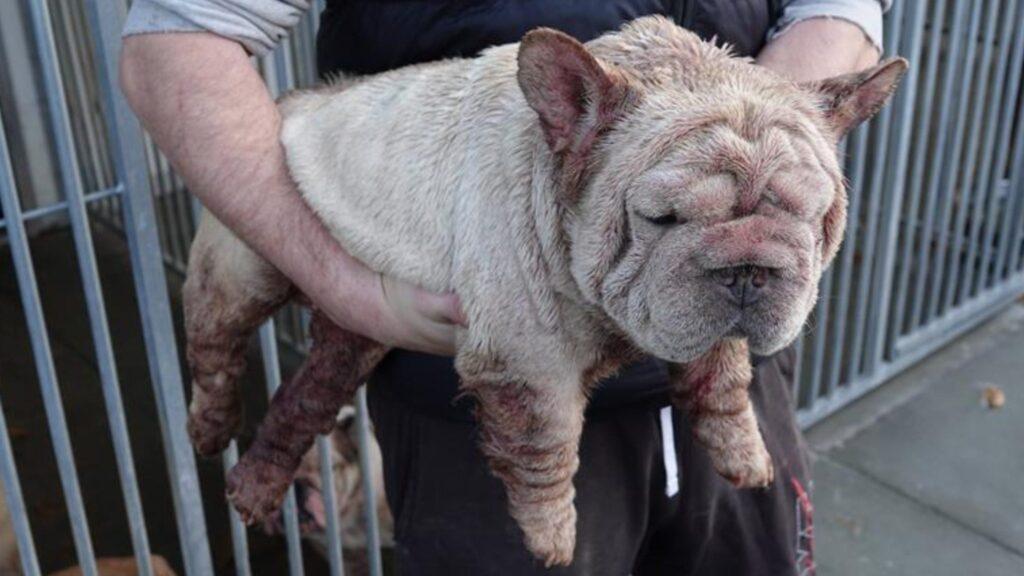
Photo credit: Scottish SPCA


