Non-animal methods (NAMs) can make animal testing a thing of the past.
Advances in non-animal methods (NAMs) represent a significant and exciting shift towards more ethical and effective scientific research. These technologies not only promise to reduce - and ultimately replace - reliance on animal testing, but also enhance the relevance and accuracy of scientific data.
As these methods continue to develop and gain acceptance, they offer a promising future where humane science and cutting-edge innovation go hand in hand. The continued investment in and support for these alternatives are essential to fully realise their potential and transform scientific research and safety testing.
Explore this section
Main Menu
What are non-animal methods?
Here we explain what Non-Animal Methods are, what Naturewatch Foundation are doing to encourage them, and what our supporters can do to help.
What are some examples of non-animal methods (NAM's)?
Organs-on-Chips
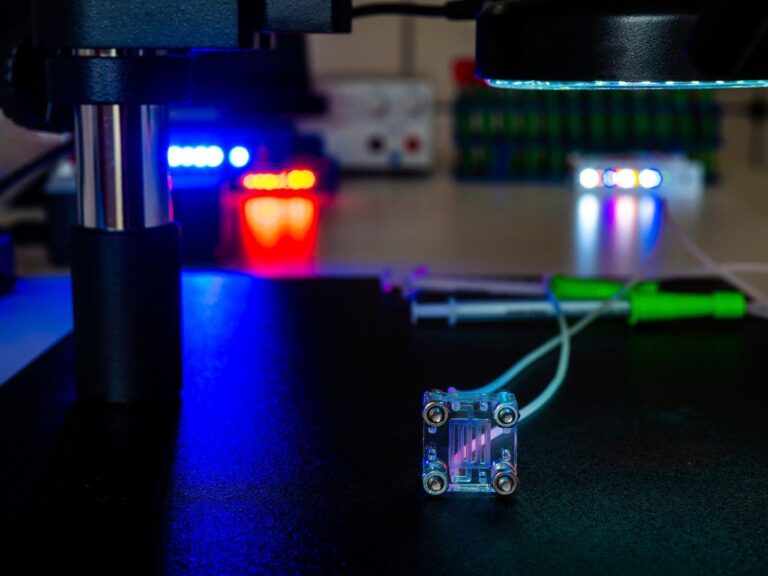
One of the most exciting breakthroughs is the development of organs-on-chips. These small devices contain human cells arranged to mimic the structure and function of real human organs. For example, a lung-on-a-chip can replicate the breathing motion and response to toxins, providing a dynamic environment for studying respiratory diseases, drug efficacy, and toxicity. This technology offers a high level of precision and relevance to human physiology, often outperforming traditional animal models in predictive accuracy.
Computer Modelling and Simulation
With the rise of computational power, computer modelling and simulation have become indispensable tools in modern research. These methods use sophisticated algorithms and vast datasets to simulate biological processes and predict how drugs will behave in the human body. In silico models can quickly and efficiently test hypotheses, identify potential drug candidates, and predict adverse effects, significantly reducing the need for animal experiments!
3D Bioprinting
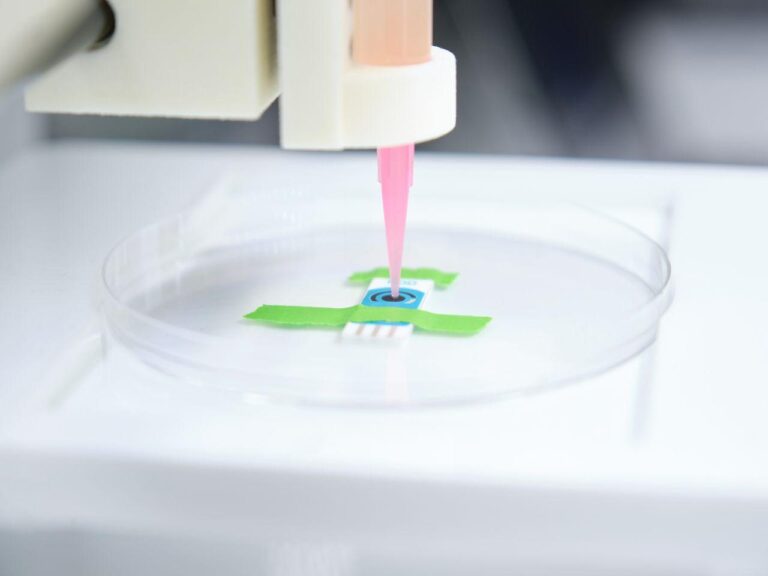
3D bioprinting is another revolutionary technology making waves in the scientific community. This technique involves printing layers of living cells to create tissue structures that closely resemble human organs. Researchers can use these printed tissues to study disease mechanisms, screen drugs, and even potentially grow transplantable organs in the future. The customisation and complexity achievable with 3D bioprinting could make it a powerful tool for achieving personalised medicine and complex biological research.
In Vitro Testing
In vitro methods, which involve studying cells or biological molecules outside their normal biological context, have seen significant advancements. High-throughput screening, where thousands of compounds are tested simultaneously on cultured cells, has become a cornerstone of drug discovery. Additionally, human cell-based assays are being refined to better mimic human biology, providing more accurate data on drug interactions, toxicity, and efficacy than animal models.
Microdosing Studies
Microdosing studies involve administering very low, non-therapeutic doses of a drug to willing human volunteers. These studies can provide early insights into how a drug behaves in humans without the ethical and translational concerns associated with animal testing. Advances in analytical technologies have made it possible to detect and analyse these low-dose exposures with high precision.
The future
NAMs offer all countries across the world the opportunity to embrace animal-free science that is not only more ethical, but also more accurate.
To make this a reality, it’s vital that industries and governments back NAMs and provide funding, incentives and regulatory support.
Helping fund the future of animal-free research
Through our partnership with The Humane Research Trust, Naturewatch Foundation is proud to support a research grant that advances animal-free science at the forefront of medical innovation.
The grant has been awarded to Dr Minerva Bosch-Fortea at Bart’s Cancer Institute, where it will help fund the development of an animal-free model to study how leukaemia progresses in the bone marrow.
The research aims to prevent the use of around 400 mice each year over the five-year programme and could reduce the use of mice in this type of research by up to 80%. These figures show the very real difference that investment in non-animal methods can make for animals, science and future patients.
Find out more about the grant, and what it could mean for the future of animal-free science.