06.01.26
At the end of last year, the UK Government published its long-awaited Animal Welfare Strategy, which outlines its pledges for wildlife, companion animals, farmed animals and animals overseas. Whilst the strategy is ‘for England’, some pledges would see progress in other nations, too.
There are over 60 actions in the strategy and the government says it aims to complete them by 2030, although only a few commitments include any indication of timeframes.
Here’s what our campaign team makes of the strategy so far.
Wildlife crime by Jim Clark
Commitments in the strategy for the welfare of wild animals includes plans to ensure wild animals are treated with respect as other animals are by:
- Updating legislation that has not kept pace with the latest scientific evidence.
- Continuing to protect and promote high standards of welfare for kept wild animals, which are those species of animals not normally kept in Great Britain.
Naturewatch Foundation strongly supports the Government’s Animal Welfare Strategy and welcomes its renewed commitment to strengthening protections for wildlife. Our mission to end cruelty and promote compassion for animals aligns closely with the Strategy’s focus on enforcement, evidence-based policy, and meaningful reform across wildlife management practices. We support signals of decisive action on trail hunting and the banning of snares, both of which raise significant and long-standing animal welfare concerns.
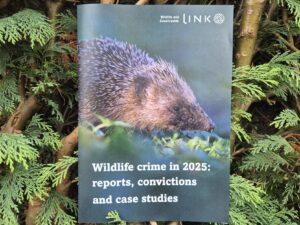
The Naturewatch Foundation Policing Wildlife Crime report reveals how inconsistent crime recording systems across police forces are leaving British wildlife exposed and unprotected. From illegal hunting and poaching to cruel traps and habitat destruction, countless crimes are going unrecorded, ineffectively investigated and those who offend go unpunished. We will continue to advocate for updated and effective legislation and are delighted the government has identified the need in the strategy.
More than twenty years after the Hunting Act 2004 came into force, Naturewatch Foundation remains concerned that illegal hunting continues under the guise of trail hunting. Trail hunting did not exist at the time the 2004 Act was passed and has increasingly been used as a loophole that risks enabling the deliberate chasing of wild mammals.
The use of large packs of hounds, animal-based scents, and practices such as lifting and dropping trails significantly increase the likelihood that live animals will be pursued. This not only causes distress and potential injury to wildlife but also presents risks to domestic animals and public safety. Naturewatch Foundation therefore strongly supports the commitment to end trail hunting and to actively be involved in the consultation in early 2026 to shape how a ban will be delivered.
Naturewatch Foundation also welcomes the manifesto commitment to ban the use of snare traps in England. Snares are inherently indiscriminate and can cause prolonged suffering, capturing non-target species such as badgers, hares, and companion animals. Public concern is clear, with strong support for a ban, and the welfare case is overwhelming. Ending the use of snares is a vital step towards preventing unnecessary suffering and modernising wildlife management practices.
In relation to snares and other traps, we support the Government’s commitment to review other trapping methods where welfare concerns have been raised. Naturewatch Foundation will work with experts to contribute evidence and practical insight, ensuring that any future recommendations are grounded in animal welfare science and real-world impacts.
Naturewatch Foundation will continue to actively support the campaign for a close season for hares in England and Wales, recognising the clear animal welfare and conservation benefits. We will work with policymakers, experts, and partner organisations to promote evidence-based reform, highlighting the risks to leverets during the breeding season. By raising public awareness and advocating for modernised legislation.
Overall, Naturewatch Foundation views the Animal Welfare Strategy as an important opportunity to deliver meaningful, lasting improvements for wildlife. Through collaboration, evidence-sharing and constructive engagement, we will continue to support reforms that uphold high welfare standards and reflect society’s expectation that wild animals are treated with respect and compassion.

Companion animals by Natalie Harney
The strategy sets out a wide range of commitments aimed at improving the lives of companion animals. These include plans to:
- Consult on reforming veterinary regulation, following the Competition and Markets Authority’s inquiry into companion animal veterinary services.
- Develop secondary legislation to implement the puppy and kitten smuggling ban introduced shortly before Christmas last year.
- Improve enforcement of pet travel rules.
- Consult on a new dog breeding registration system, as well as consult on improving and expanding the current dog breeding licensing framework.
- Promote greater uptake of pet selling licences among cat breeders, alongside improving understanding of the cat trade.
- Consult on licensing rescue and rehoming centres.
- Work with others to encourage responsible pet ownership.
- Work with local authorities to strengthen enforcement of existing rules.
- Consult on banning electric shock collars.
- Improve oversight of microchip databases.
We’re particularly pleased to see Defra commit to a consultation on dog breeding, including proposals for a registration system for all dog breeders. This is a measure we strongly support. Under such a system, anyone breeding dogs in England who doesn’t currently need a licence would need to be registered with a regulator, most likely their local authority.
In 2025, Naturewatch Foundation revealed that 4 in 5 UK puppies still come from unknown sources, including unlicensed breeders, illegal breeders and puppy smugglers. Against this backdrop, the case for stronger regulation of dog breeding and selling is undeniable. A registration system could be a vital step towards improving traceability and transparency, but it must also be underpinned with a sensible set of welfare-oriented registration conditions.
While the devil will be in the detail, we’re hopeful registration could begin to close some of the loopholes that currently allow low-welfare and illegal breeders to operate under the radar by posing as small-scale breeders, whilst also helping members of the public navigate a simpler system where all breeders are either registered or licensed.
Alongside breeder registration, Defra has also pledged to consult on tougher health and welfare standards for licensed breeders, and on extending licensing to other breeding-related businesses. This includes businesses that hire out male “stud” dogs, canine fertility clinics and whelping services. These are encouraging commitments as they show new challenges have been recognised.
Naturewatch Foundation’s Forgotten Dogs report, published in 2025, highlighted the specific welfare risks faced by male dogs used for breeding, and how current legislation in England and Wales overlooks them. We believe businesses that profit from hiring out male dogs should be brought firmly within the dog breeding regulatory framework. We’ve also been campaigning for several years against the rise of unregulated canine fertility clinics, so we welcome Defra’s recognition of this issue. While we have some reservations about whether licensing is the most effective solution for these businesses, we will engage constructively with Defra and others to ensure the welfare of dogs used for breeding is properly protected.
We’re also encouraged that Defra’s strategy recognises the harm caused by breeding dogs for extreme physical traits. Although some safeguards already exist in existing law in England, they are largely being poorly applied. Naturewatch Foundation will be urging Defra to not only strengthen rules to prevent harmful breeding practices, but to also provide improved guidance for local authorities on this issue.
Finally, it’s particularly positive to see a clear commitment to working with local authorities and animal welfare organisations to improve enforcement. Naturewatch Foundation has long raised concerns about the patchy and inconsistent enforcement of dog breeding laws across England, and we’re pleased this issue is being acknowledged at a national level. One basic thing we’d like to see addressed is poor recording of dogs during inspections, after we discovered in 2025 that only 34% of local authorities across the UK could confirm the total number of adult dogs kept by the breeders they’d licensed, as well inconsistent approaches to recording puppies.
While we would like to see firmer commitments in some areas and clearer timeframes, we’re encouraged by the breadth of Defra’s proposals for companion animals. We look forward to engaging with these plans and continuing to push for meaningful change for animals impacted by the pet trade in the years ahead.

Protect Animals, Protect People by Mark Randell
The strategy recognises that pets play a central role in many people’s lives, with around 51% of UK adults owning a pet and millions of dogs and cats living in homes across England. This reflects a growing understanding that animals are integral to human companionship, emotional wellbeing, and family life, and that animal welfare protections must reflect this reality. Importantly, it signals that England and Wales are beginning to catch up with international approaches that recognise the interdependence of animal and human safety. For example, in Greece, responsibility for companion animal protection now sits with the Minister for Citizen Protection, formally acknowledging that companion animals are linked to public safety and safeguarding rather than treated solely as agricultural or property concerns.
The strategy explicitly states that “studies have shown that there is a strong link between pet abuse and domestic abuse,” noting that harm or threats to animals are frequently used as a tool of coercive control to manipulate and exploit victim-survivors. Notably, this recognition now appears in both the Animal Welfare Strategy for England and the Government’s Violence Against Women and Girls strategy, marking a significant and joined-up policy shift.
Proposed actions within the strategy include:
- Considering the findings of commissioned research (summer 2025) on the link between animal abuse and domestic abuse to identify opportunities for early intervention.
- Working with the veterinary profession to support initiatives that help vets and practice staff identify possible domestic abuse through non-accidental injuries to pets.
- Partnering with charities to raise awareness of pet fostering services for victim-survivors, reducing a major barrier to leaving abusive situations.
- Strengthening the pet microchipping regime to prevent perpetrators from accessing victim-survivors’ personal information to track, harass, or control them.
Taken together, these measures demonstrate that the strategy looks beyond traditional animal welfare boundaries and does not treat animal protection in isolation. Instead, it explicitly connects animal welfare to human safety, wellbeing, and safeguarding, particularly in the context of domestic abuse and coercive control.
Building on this, we will be launching our Act to Protect document, which brings these commitments together into a clear, practical action plan. Using a CONTEST-style framework, it goes further in setting out how improved understanding of the role animals play in abuse can strengthen prevention, protection, and accountability across safeguarding systems.
Farmed animals and international commitments
The strategy also includes a number of promising commitments to advance animal welfare for farmed animals and a small number of pledges to improve the welfare of animals outside of the UK. These are not issues we specifically campaign on, but we’re pleased to see the hard work of friends across the sector paying off. It’s particularly encouraging to see proposals to move away from some cage-based systems and to end the cruel use of carbon dioxide gas stunning of pigs. Read more about the government’s commitments for farmed animals and animals overseas here.
What about animals used in experiments?
A separate strategy outlining how the government intends to phase out the use of animals in science was published in November. Read our campaign manager, Kate’s, overview here.
What happens next?
Over the coming weeks, we’ll be engaging with policy makers and others about how we think these promises can best be delivered to advance animal welfare. We’ll also be pressing Defra for further detail about timelines and urging swift action to improve protections for animals. After all, it has taken over 18 months just to produce the strategy and we know from experience that promises can be quietly shelved or left incomplete when governments change, so time is of the essence.
We’ll keep you posted about developments and, most importantly, ways you can get involved and help turn these commitments into real change for animals.