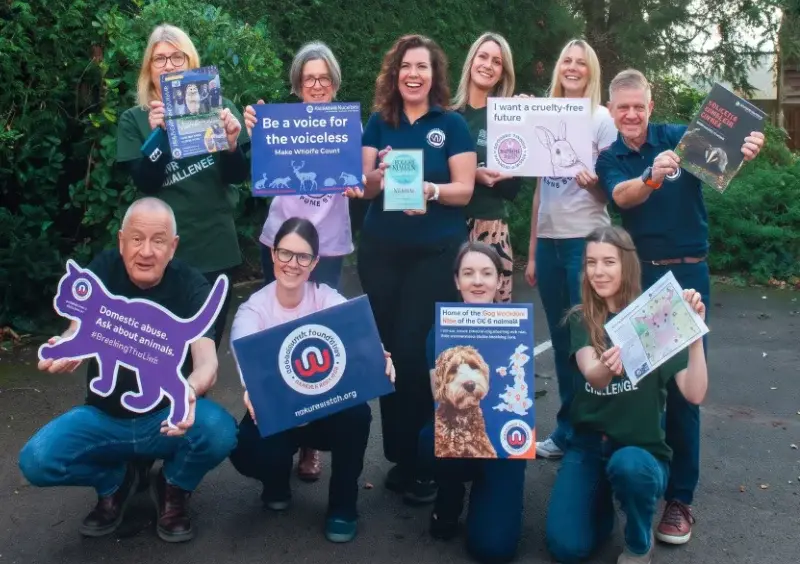
Because it’s never ‘just’ animal abuse. Animal cruelty is often the first visible sign that a family is unsafe, and recognising that link helps protect both people and animals.
Our Message
When animals are harmed, people are often at risk too.
Recognising and responding to that connection is essential — across legislation, the criminal justice system, and safeguarding.
When we take animal cruelty seriously, we’re also protecting families, strengthening communities, and preventing further harm.
Over a third of women say they’ve stayed in abusive homes because they had no safe place for their animals.
Animal cruelty isn’t just an animal welfare issue — it’s a public safety, social justice, and compassion issue.
Explore this section
Main Menu
What is coercive control?
Mark explains what coercive control is, how it’s linked to our Protect Animals. Protect People. campaign, and where you can find help.
The story so far…
How far we’ve come…
We've trained more than 2,000 professionals across policing, safeguarding, animal welfare and frontline services to help them recognise the links between animal abuse and domestic violence.
Our campaign is now referenced in both the Government 2026 UK Animal Welfare Strategy and the Violence Against Women and Girls (VAWG) Strategy.
100% of police websites (44/44) in England and Wales now provide guidance for domestic abuse survivors where pets are targeted as part of coercive control, alongside information on the RSPCA website.
Next steps…
We are campaigning for Holly's Law, an Animal Abuse Disclosure Scheme that would help people access relevant information about a partner's history of animal abuse.
We will continue working with MPs, professionals, campaigners and Holly's family to build support for Holly's Law and push for meaningful change.
We worked closely with a number of police forces and safeguarding teams to influence policies and strategies so that pets are considered in domestic abuse investigations.
Actions and updates…
We met with government representatives to push for greater recognition of the links between animal abuse and domestic abuse.
The Government has committed to strengthening statutory guidance on domestic abuse and coercive control, including consideration of the role of pets and animal abuse.
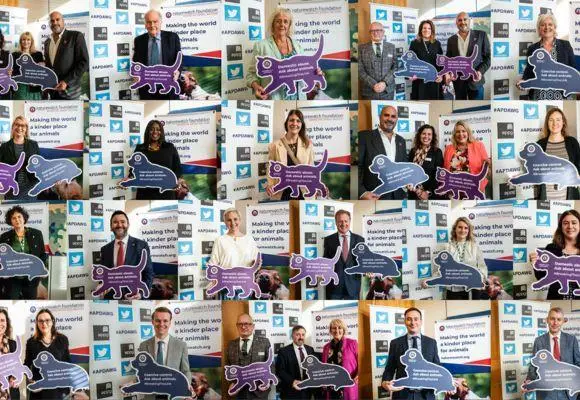
We brought Holly’s Law to Parliament, working alongside Holly’s mother, Annette Bramley, MPs and campaign partners to call for an Animal Abuse Disclosure Scheme.
Our parliamentary meetings and events have helped raise awareness of how a history of animal abuse can be a warning sign of wider harm. We’ll continue working to build support for Holly’s Law.
We deliver training to help professionals understand how animal abuse can be linked to domestic abuse and coercive control.
We’ve now trained more than 2,000 professionals across policing, safeguarding, animal welfare and frontline services.
We worked with campaign partners and policymakers to highlight the importance of protecting animals and people experiencing abuse.
The Crime and Policing Act 2026 includes changes that strengthen protections for animals and children experiencing abuse.
Abusers understand the special bond that exists between a person and a pet. That’s why they use animals to control, threaten or hurt others - just like they might isolate a victim from friends, family or money. This is called coercive control.
Mark Randell, Campaign Manager, Naturewatch Foundation
A history of the human–animal violence link
Violence towards animals and violence towards people often share the same roots: power and control.
Wildlife crime, illegal puppy farming, and organised animal cruelty aren’t isolated acts, they’re connected to wider criminal networks, tax evasion, and exploitation.
We also know that children who are exposed to animal abuse are at a greater risk of committing violent crimes later in life. Early intervention saves lives, both human and animal.
Threatening or harming an animal is rarely an isolated act.
Cathryn Blyth, Chair of the Avon, Somerset and Gloucestershire Local Family Justice Board Domestic Abuse Advisory Group
A Call for Change
Our campaign calls for stronger recognition of this link across all areas of society:
In law and policy, to ensure animal cruelty is treated as a serious crime.
In criminal justice, to identify and address patterns of violence early.
In safeguarding and education, to protect children, families, and communities.
By protecting animals, we help prevent human suffering and build safer, more compassionate communities.
The Power of Compassion
The compassion we show towards animals reflects who we are as a society.
From the cruelty of animal testing to the illegal puppy trade, animals are too often treated as disposable. Yet the companionship and emotional support they provide, especially during times of loneliness and stress, are invaluable.
That bond between people and animals is something worth protecting. Because when we care for them, we’re also caring for ourselves.
Join Us
Stand with the Protect Animals, Protect People campaign.
Together, we can break the cycle of violence, strengthen communities, and protect all who are vulnerable.