13.10.26
Trigger warning: This article discusses domestic abuse, and violence against animals, which some readers may find distressing. If you need support, you can contact the National Domestic Abuse Helpline on 0808 2000 247.
When an animal is abused, it can be a warning sign that someone is being harmed too. Naturewatch Foundation is working to ensure this link is recognised, so that animals and people are protected.
For years, animal welfare has been treated as an issue for animal charities, farming and environmental policy. But outside of this, animal abuse can also be a warning sign of danger to people. In some cases, it is used to frighten, control or punish people, particularly within domestic abuse.
That’s the idea behind our Protect Animals. Protect People. campaign. We want to see animal abuse taken seriously not only by animal welfare organisations, but also by the police, domestic abuse services and other professionals responsible for keeping people safe.
When animals are protected, people are safer too.
The hidden scale of animal abuse in domestic abuse
Domestic abuse affects millions of people across England and Wales. In the year ending March 2025, an estimated 3.8 million people experienced domestic abuse, while police recorded more than 1.3 million domestic-abuse-related incidents and crimes.
These figures don’t capture what happens to the pets in those homes. The RSPCA reports that 71% of domestic-abuse victims experienced threats to their pets.
For victims, the threat or abuse of an animal can be another way of controlling, frightening or isolating them. It can also make leaving more difficult when there is nowhere safe for the animal to go.
No one should have to choose between their own safety and the safety of an animal they love.
Why protection still depends on where you live
When we launched our campaign in 2023, none of the UK’s 44 police force websites had proper information for victims whose pets had been threatened or harmed.
Thanks to campaigning, all 44 now do. This is an important step forward, but there is still more to do.
Our 2025 One Response research found that 41 forces train officers on coercive control, yet only 26 cover the role of pets.
This means a survivor’s experience can still depend on where they live.
Around 60% of UK households have a pet, so there could be as many as 900,000 crime scenes a year where an animal is present. That doesn’t mean 900,000 cases of animal abuse, but it shows how many chances professionals have to spot warning signs.
That’s why we launched our Act to Protect framework in January 2026. It sets out four practical ways to improve protection for animals and people:
- Protect: helping victims escape safely with their animals
- Prepare: training police, prisons and safeguarding teams to see animal abuse as a sign of wider harm
- Prevent: treating animal abuse as an early warning sign, so professionals can step in before violence escalates
- Pursue: using information about animal cruelty to support investigations, risk assessments and offender management
The real lives behind the statistics

Behind the evidence are real people and animals whose lives have been changed by abuse.
Holly Bramley was murdered by her husband in 2023. Before her death, he had killed her pets and had a history of animal cruelty. Her family is now campaigning for Holly’s Law, with support from Naturewatch Foundation. Holly’s story is sadly not an isolated one.
Across England and Wales, courts have heard cases in which pets have been threatened or harmed as part of domestic abuse. In Norwich, a man attacked his partner and killed her Chihuahua, Snowy, receiving a prison sentence and a ten-year ban on keeping animals. Other cases have involved abusers threatening to kill pets, using them to control their partners or deliberately hurting them to cause fear and distress.
Sadly, some of these cases ended with the death of a much-loved pet. In Leicestershire, a man was jailed for more than 11 years for raping and coercively controlling two partners, and for seriously injuring one victim’s dog, who had to be put down.
What these cases show is that animal abuse cannot always be seen in isolation. The animal may be the target, but the behaviour is often part of a wider pattern of intimidation, coercion and violence against a person.
When animal abuse signals wider danger
The link between animal abuse and violence against people is not limited to domestic abuse.
Animal cruelty can also appear alongside other serious offences. While every case is different, this is another reason why professionals need to take reports of animal abuse seriously and consider whether there may be wider safeguarding concerns.
Putting animal abuse on the parliamentary agenda
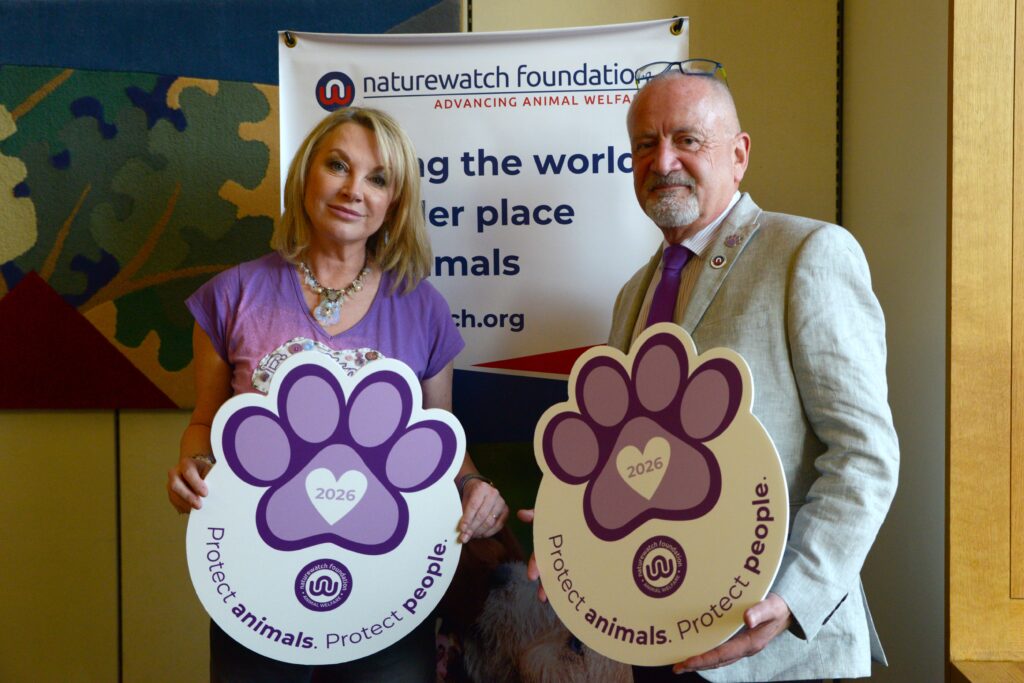
Our campaign has made important progress in Westminster.
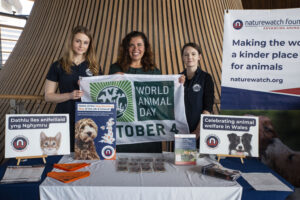
In March 2026, we held a Purple Paw event in Parliament to raise awareness of the link between animal abuse and domestic abuse. This was followed by a cross-party round-table discussion about Holly’s Law in June.
On June 29, the issue was debated in Westminster Hall, putting the link between animal abuse and domestic abuse on the parliamentary record.
The link is also now recognised in both the UK Animal Welfare Strategy and the Violence Against Women and Girls Strategy. This is an important step towards ensuring that animal abuse is considered across the different services responsible for public safety.
We were also encouraged by a letter from Satvir Kaur MP, Minister for Safeguarding and Violence Against Women and Girls, on 7 October 2026.
The Minister wrote:
“I was particularly interested to read about your Protect Animals, Protect People campaign. This Government recognises the links between animal abuse and domestic abuse, including the use of threats or harm to pets as a means of coercion and control.”
The Minister also confirmed that the Government is updating its guidance on domestic abuse and controlling or coercive behaviour, with the aim of strengthening consideration of pets and animal abuse. Home Office officials will continue working with our campaign as this work progresses.
This step forward is huge. The campaign is giving animals a much louder voice.
What needs to happen next
The challenge now is turning recognition into consistent practice.
We need:
- Mandatory police training, so every frontline officer understands how animals can be used in coercive control and what animal abuse may indicate about wider risk.
- Consistent safeguarding, with animal abuse routinely considered in risk assessments and safeguarding processes.
- Better information sharing between animal-welfare organisations, vets and professionals responsible for assessing risk, with proper safeguards.
- Animals included in MARACs and MATACs, so relevant information can contribute to protecting victims and managing offenders.
- Progress on Holly’s Law. The government should properly examine an Animal Protection Disclosure Scheme, including how relevant information can be considered when assessing risk.
- Better recording of cases: We need more reliable information about how often animal abuse occurs alongside domestic abuse, so that the scale of the problem is better understood.
These changes would help make sure that important warning signs are not overlooked.
There is also a wider question about intelligence. If animal abuse can be an indicator of coercive control, escalating violence, child abuse or other offending, then information about that abuse needs to be visible to the professionals who assess risk. That does not mean sharing everything with everyone.
For example, a police officer responding to a domestic abuse incident should know to ask about the family pet. A safeguarding professional should understand that a threat to kill a dog may be a threat to the victim.
The aim is simple: make sure the right information reaches the right people when it could help prevent harm.
Stand with us to protect animals and people
One simple way to show your support is to ask your MP to display a Purple Paw window sticker. The Purple Paw is a symbol of our Protect Animals. Protect People. campaign and helps raise awareness of the link between animal abuse and domestic abuse.
By asking your MP to display a sticker, you can help bring this important issue to their attention and show that protecting animals and protecting people belong together.
You can also help by sharing our campaign, talking about the link between animal abuse and domestic abuse, and encouraging others to learn more.
Ask your MP to display a Purple Paw sticker
Protecting animals means protecting people too.