17.08.26
The numbers have risen
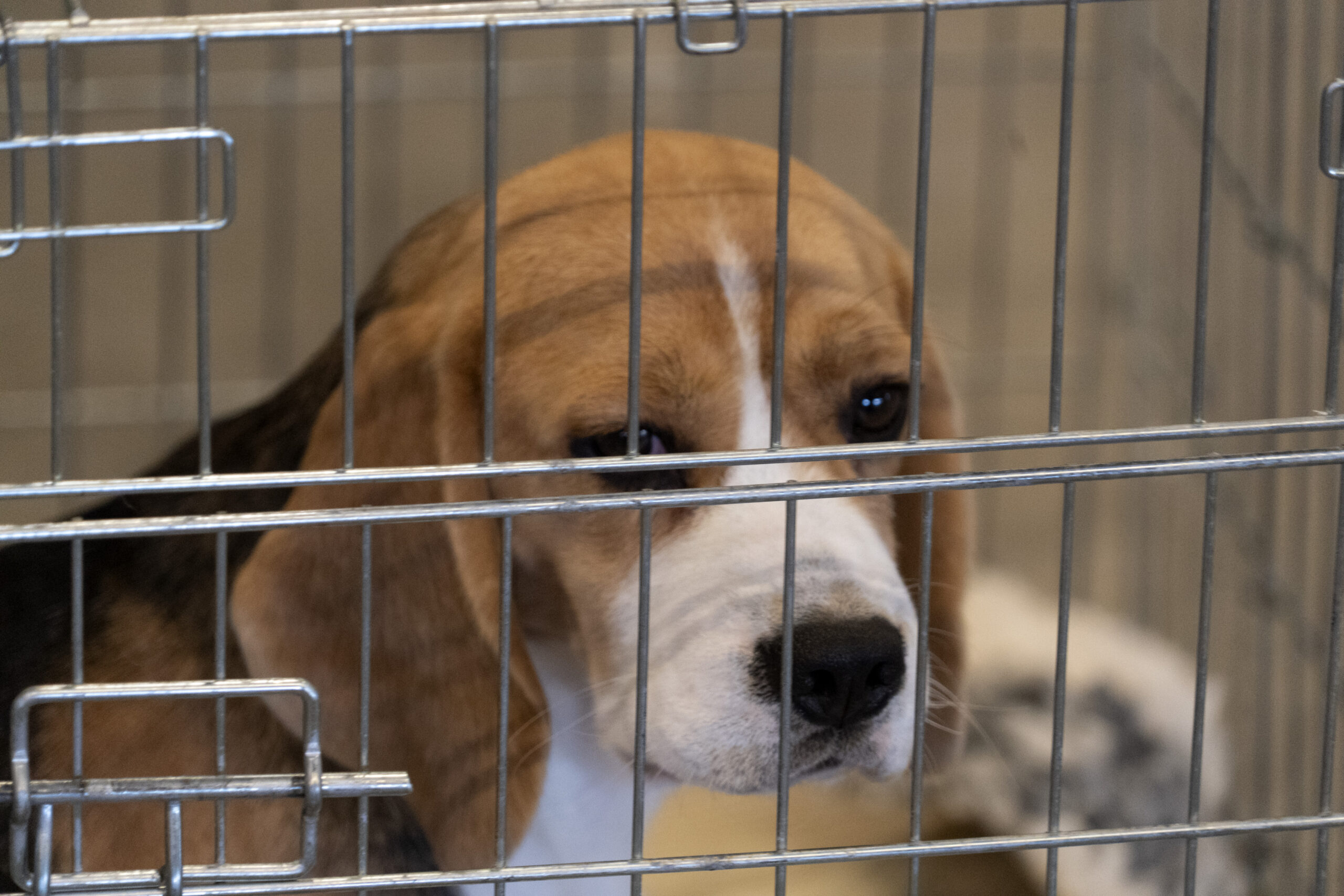
The latest official figures* reveal a 9% rise in experimental procedures involving dogs in Britain in 2025, compared with 2024.
The rise in experiments shows that the shift to modern, non-animal methods is happening far too slowly.
The Government itself has recognised that greater urgency is needed to phase out the use of animals in science.
What tests are dogs most used for?
Most experiments involving dogs were carried out for toxicity and other safety testing. Around three-quarters involved repeated-dose toxicity testing, where dogs are given a substance repeatedly over a set period to see whether it causes harmful effects.
These tests can last up to 28 days, between one and three months, or longer than three months, depending on what is being studied.
Science is moving on: it’s time we did too.
Animals are widely recognised as being outdated and unreliable models for predicting how humans will respond to medicines. At the same time, non-animal methods are making science more reliable and more human-relevant – and crucially, could bring an end to animal suffering.
It is now more important than ever to accelerate the transition to modern, non-animal-approaches that can replace the use of dogs-and all animals – in research.
How you can help
Help us to be a voice for dogs used in research.
*https://www.gov.uk/government/statistics/scientific-procedures-on-living-animals-great-britain-2025