Understandably, I was monitoring the situation in Ukraine with the latest Russian attacks on an hour-by-hour basis. That morning, there had been a Russian shelling of a military aircraft service centre in Lviv – some would say that was a little close to home, being just 50 miles from our operation base!
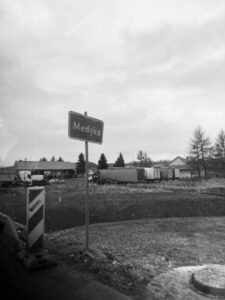 On the final stretch into Medyka, it dawned on me how normal life was here next to a war zone. I eyed the large black smoke cloud bellowing over Lviv from the earlier attack and a man was busy mowing his lawn in the same scene. Arriving 30 hours after leaving home, the sensible thing would have been to have rested, but we had made it all that way so that was never an option.
This would be the first time I met Roksana and Donald, a Polish-Scottish couple who I had arranged to link with for the operation. Immediately, I was at ease in their company, and was pleased to have Roksana’s feisty but compassionate character for support. Most people either spoke Ukrainian or Polish, so she was invaluable to translate for our operation.
Having been a military child, and now a military spouse, I had a pre-conceived idea that there would be order and instructions for those fleeing a war zone but boy, was I wrong.
The border was chaotic, with many charities having set up camp to do their bit for those fleeing Ukraine. It was overwhelming for me, let alone those crossing the border out of their home country.
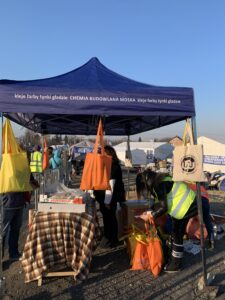 Their first glimpse of life beyond the border was a camera thrust in their faces, interview requests and an overly keen attempt at sandwiches being forced on them. Perhaps all well-meaning but, in the face of trauma, somewhat overbearing. We soon parked the veterinary van at the designated aid spot and began the task of handing out essential animal supplies.
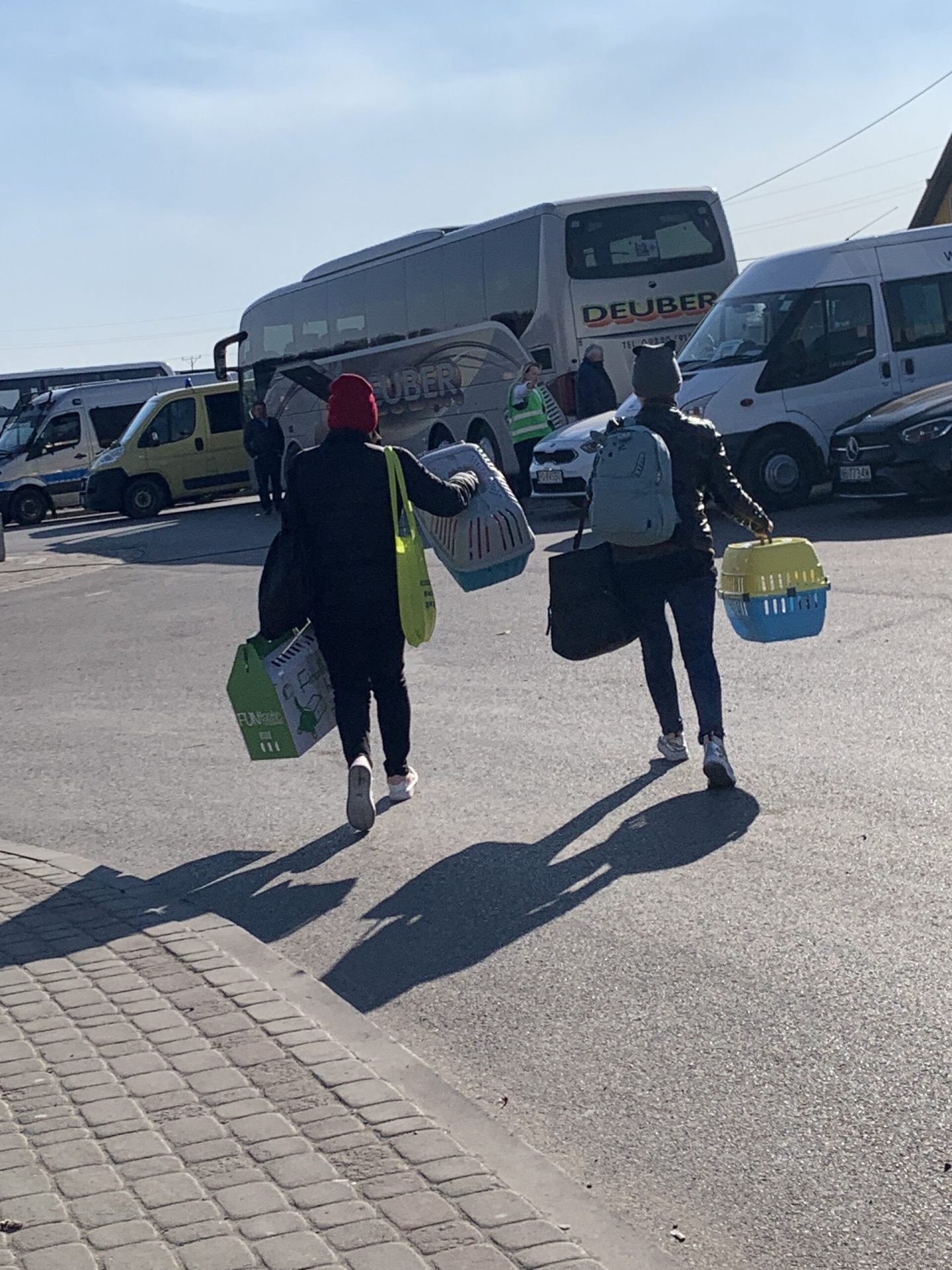
There were two women who, before we had even removed the tape from the first box, had spotted our pet carriers. They explained through hand gestures and a mutual giggle at my ‘meowing’ noises, that they had cats and needed to keep them secure – of course, we handed over two carriers. They walked away with a sense of relief and, hopefully, a smile from a poor attempt from a British woman at communicating using animal noises. (Whatever it takes, eh?!)
That evening, there was an influx of refugees through customs, but the team desperately needed sleep, so we left our boxes of thermal gloves, socks and hats with our Polish team and got our heads down.
I later had a message from Roksana, who explained that temperatures had dropped to -6°C (21.2°F).
The donations provided by British supporters of DOTS and Naturewatch Foundation made the difference between families freezing in hours of queues and being warm. Every piece of warm clothing we took over was given out that night. Dogs now had thick warm coats and the people no longer shivered.