Let’s talk about social media
Ever wondered how your ‘FYP- For you page’ on Tiktok suddenly floods with videos ranging from elaborate cake designs to gymnastics? Simply put, it’s all down to a chain reaction within a cleverly designed algorithm.
Across the modern digital world, algorithms are used to determine the content you see and everyone’s results differ depending on the accounts you interact with, the hashtags you use and even your location and language preferences.
Animal cruelty online
Does it, therefore, surprise you that animal cruelty content, such as the recent horrendous incident of a kitten being slaughtered in a kitchen device, so easily and quickly makes its way through the chain reaction and lands on the pages of millions of users globally?
It reached our campaign’s assistant on her phone simply by her interacting with cute animal posts. It’s reached millions of people around the world, and it’s reached young children in the playground.
Animal abuse online going viral isn’t new. During my time investigating animal cruelty cases, I recall many times where the crimes were digitally enabled, from young offenders sharing cruelty to hedgehogs on Snapchat to organised criminals using Whatsapp to arrange the illegal importation of exotic animals from around the world into pet shops around the UK.
The modern digital world quite clearly enables animal crime globally with currently very little power in the toolkit to do much about it. Once it has been seen, it can’t be unseen!
In 2018, the RSPCA conducted a survey which resulted in nearly 25% of school children claiming to have viewed animal cruelty online. That was 5 years ago…it would be reasonable to conclude that the number would now be higher with an increase in social media and devices.
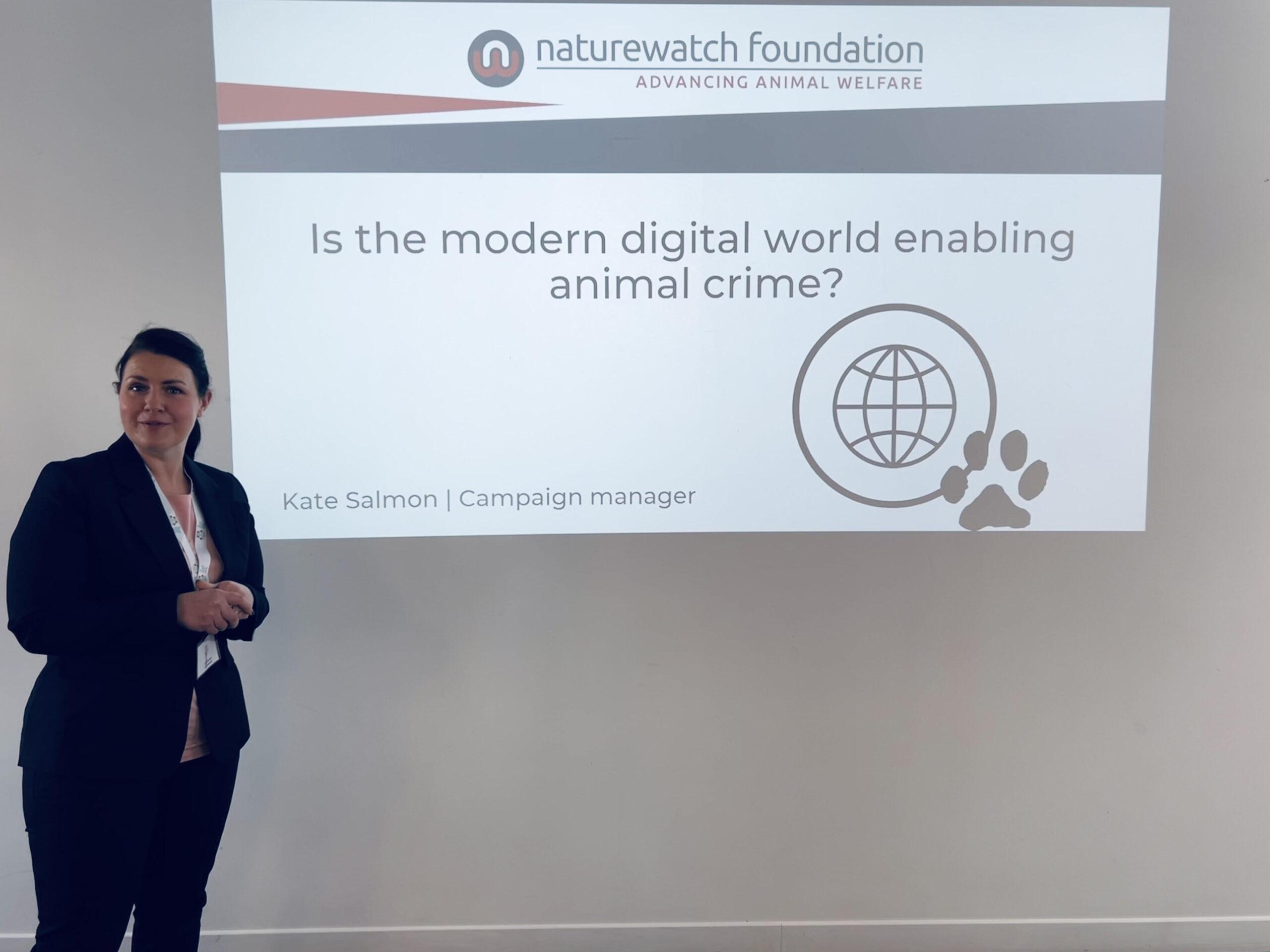
This week I’m thrilled to be presenting at the Chartered Society of Forensic Sciences one-day event ‘Applications of Digital to Forensic Investigations’. In an age where global communication is just a screen swipe away, has the modern way of life contributed to an increase in animal cruelty and exploitation? We discuss the complexity of human behaviour towards animals when an audience of millions is so readily available to all.
Making online a safer space for animals
I’m so pleased to share with you all that I represent Naturewatch Foundation on the newly formed Animal Crime Related Working Group, led by the Chartered Society of Forensic Sciences and made up of professionals including law enforcement, animal welfare experts, the criminal justice system and academics. Together we’re working towards a safer space for people and animals.
Whether it be protecting wildlife in the UK by investigating a wildlife crime, like badger baiting and hare coursing or using our knowledge and experience to raise awareness of the importance of protecting people by protecting animals, Naturewatch Foundation is committed to advancing animal welfare around the world with your incredible support.