Those who harm animals harm people too
Our ‘Protect Animals. Protect People.’ campaign during 2023 has been focused on the UK, but the project has roots in our international training programme, where we show how animal cruelty and human abuse is interlinked. We know that keeping animals safe has a direct impact on human welfare and that this connection transcends borders.
As a former detective, the presentations that I give to the police focus on real-life cases. This gives it the authenticity necessary to reach that audience.
Some of these cases are, of course, well known and have been made into Netflix series. Some are less notorious but are equally important. Studies about all animal cruelty should be seen as a ‘red flag’, especially when the motivation of that cruelty is also about inflicting harm on people.
To be able to prevent crime, it is essential to understand why it happens. Without this, any response will only be superficial.
Kuzi’s story
I’ll explain through the tragic case from Russia of a cat called ‘Kuzi’. This work can be upsetting to hear about but, unless we face the reality of what is happening, we cannot prevent more atrocities.
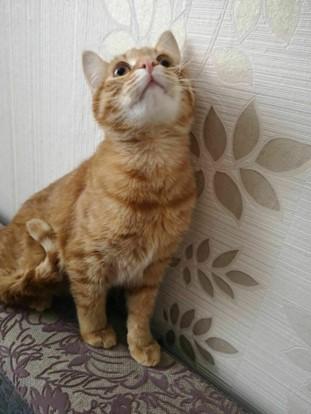
Kuzi was the companion of Elena Yuryevna Lavrentieva who lives in Severedonetsk. Elena and her daughter-in-law, Anna-Victoria Gromovich, were in a conflicting relationship. It appears there were many disagreements about Elena’s son, Artyom Lavrentyev.
One day, Elena was listening to music through her headphones and did not hear the noises of the tragedy that was unfolding around Kuzi. She later went to look for him, but he could not be found anywhere. Anna-Victoria and Artyom told her that Kuzi had “jumped from the window”. He had seemingly disappeared.
The investigation: Images began circulating on VKontakte (Russian social media) about Kuzi being tortured. Many people saw these and were outraged. There was a huge amount of public pressure to investigate this crime and more than 200,000 people signed a petition seeking justice for the cat tortured on the internet. Many celebrities also spoke out against this abuse.
The police investigated. What they found out was horrifying.
Anna-Victoria Gromovich and Artyom Lavrentyev had taken Elena’s beloved companion and tortured him to death. They then posted a video about the killing on their personal VKontakte accounts. They had buried the cat, but police investigators found the body and forensically proved he had died from the torture. This, together with the evidence from social media, was enough to convict the pair under Article 245 of the Criminal Code. The killing had taken place in front of their 14-year-old daughter.
Subsequent court hearings included psychological and psychiatric examinations, but experts decided that the accused knew what they were doing when they abused the cat. During the hearing, the cat’s owner, Elena, stated that Gromovich had threatened her and her relatives. Gromovich was understood to have said to Elena, “I took pleasure in hurting him, admire it… I love tormenting him… Your cat screamed loudly, and I liked it.”
Gromovich was sentenced to three years, two months in jail and Lavrentyev to three years, five months. They lost access to the child they shared together.
How does a case like this become relevant to England and Wales?
Those who follow our work will be aware that we made a submission to the Online Safety Act 2023 inquiry that now includes cruelty to animals. Opinions are divided as to how successful this legislation will be, but it’s a start. Levels of abuse towards animals across social media are increasing and we need to be cognisant that our campaigns remain future proof.
We also made a submission to the Sentencing Council, who advise on the length of jail terms in Magistrates’ Courts. We asked through an inquiry this year that animal cruelty committed in front of children be considered a ‘high harm’ aggravated factor. It has now been included. Through our work in Ukraine, we know that it is the only country whose criminal code awards extended jail sentences to those that commit animal abuse in front of children. However, this year the United National comment ‘GC26’ places obligations on governments to recognise the impact of children witnessing cruelty.
Our police training, and the work with do with others in public protection, explains the importance not just of recognising the animal-human bond but why abusers use that to inflict harm on the animal and to those who care for them. Once we explain WHY animal cruelty should be taken seriously, once it has been contextualised, then it is as if the light has been turned on in areas that were previously dark, and advancing animal welfare can happen.
This campaign has been very successful in reaching audiences that can make real changes and, at Naturewatch Foundation, we have used our knowledge and experience to facilitate that.
Animal abuse rarely occurs in isolation.
Studies show that 70% of cat owners say their cat helps with loneliness. Kuzi was such a cat and, whilst Anna-Victoria and Artyom were jailed after an investigation, it will of course not bring Kuzi back.
What we can do is to use our understanding of such cases to encourage the protection of other animals around the world, and when we protect animals, we protect people too.
Postscripts
- Reporting shows that Artyom Lavrentyev was conscripted into the Russian army directly from his jail sentence to fight against Ukraine and was subsequently killed.
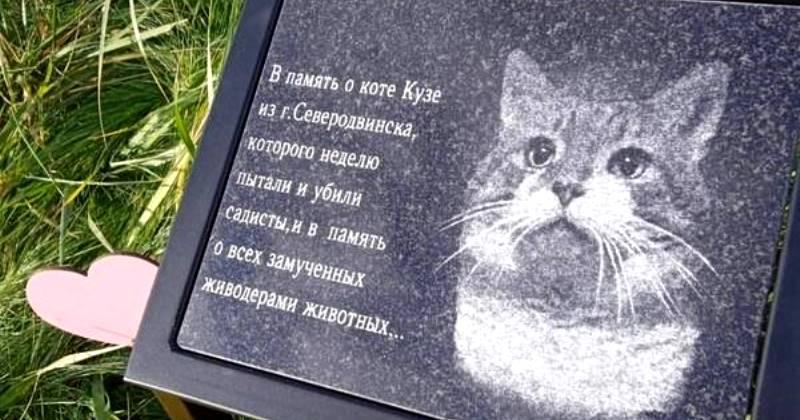
- In the pet cemetery in St. Petersburg, Russia there is now a monument to Kuzi placed by animal groups. This acts a monument to all abused animals.