In a first for Naturewatch Foundation, we were invited to give evidence to the Environment, Food and Rural Affairs Select Committee in the UK Parliament on Tuesday 4th July 2023. This was as part of an MP-led inquiry into pet welfare and abuse.
Our CEO speaks up for pet welfare in Parliament
We were represented by our CEO, Sarah Carr, who explained some of the worrying trends we’ve seen through our work in recent years, including the growth in unregulated canine fertility clinics and the link between animal abuse and domestic abuse. Sarah also gave her views about a recent ITV exposé of a worrying new puppy yoga trend, and spoke of her disappointment that the Kept Animals Bill was recently scrapped by the Government.
Sarah told MPs we want the Government to take action in light of the worrying growth in canine fertility clinics and other breeding services by:
- increasing penalties for people who perform acts of veterinary surgery illegally – the current penalty is a woeful £100 fine;
- making it illegal to artificially inseminate a female dog who cannot physically mate or whelp due to extreme breeding – it’s simply unethical to use breeding procedures to overcome a dog’s physical inability to reproduce;
- protecting male dogs used for breeding (aka ‘stud’ dogs) – stud dogs are not adequately protected by the dog breeding regulations.
Earlier this year, we made our own written submission to the inquiry and coordinated a joint response about canine fertility clinics with colleagues across the animal welfare and veterinary sector, including the UK Centre for Animal Law, the All Party Parliamentary Dog Advisory Welfare Group, the Scottish SPCA, British Veterinary Association, Focus on Animal Law, Hope Rescue Centre and campaigner, Jordan Shelley.
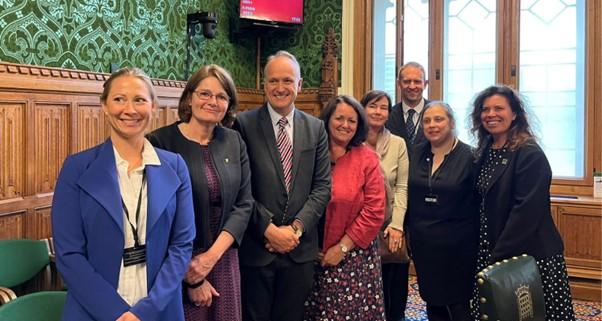
Sarah (far right) with Dr Neil Hudson MP and fellow panellists. Photo © Dogs Trust.
You can watch the evidence session here. The inquiry continues and we look forward to the outcome later this year.
Working together to end extreme conformation in dogs
On Wednesday 5th July 2023, Natalie from our campaigns team joined colleagues across the animal welfare sector to discuss a way forward in tackling the breeding and selling of dogs with harmful physical features that cause health and welfare issues.

Dogs with flat faces and other extreme body shapes often struggle with breathing difficulties, skin problems, joint issues and more. Tragically, because of our desire for them to look a certain way, some dogs can spend their lives in chronic pain. Natalie was pleased to join lawyers, enforcement personnel, academics, vets and charities to share ideas. We look forward to seeing these discussions progress over the coming months.
Scottish Government launches consultation on licensing canine fertility clinics
The Scottish Government is asking the public for its views on licensing canine fertility clinics. Like the rest of the UK, Scotland has seen rapid growth in businesses that offer breeding services, like artificial insemination and semen services, without veterinary involvement.
Veterinary law is not devolved, which means the Scottish Government can only rely on animal welfare legislation to introduce regulation. Whilst we have some reservations about licensing, we’re pleased the Scottish Government is taking action and we’d encourage anyone concerned about canine fertility clinics to respond.
The consultation is open until 26 September 2023 and you can find out more here.
RCVS confirms new guidance about canine artificial insemination
We’re pleased that the Royal College of Veterinary Surgeons, which regulates registered veterinary surgeons and registered veterinary nurses in the UK, has updated its advice about canine artificial insemination after we highlighted our concerns about the lack of legal basis for lay people performing the procedure last year.
The RCVS has confirmed that it considers canine artificial insemination to be an act of veterinary surgery, which means it should only be done by registered veterinary surgeons or registered veterinary nurses who are under the supervision of a registered veterinary surgeon.
This is welcome news – many canine fertility clinics allow lay people without veterinary qualifications to artificially inseminate dogs. This can put dogs at risk if high standards of hygiene aren’t observed and – as we’ve seen in our investigations – the procedure can be misused to breed from dogs who can’t otherwise reproduce, usually because of their extreme body shapes.
Find out more about the work we do
To find out more about the work we do to stop illegal pet breeders and unregulated canine fertility clinics visit our companion animal pages.
*Parliamentary copyright images are reproduced with the permission of Parliament