We spoke with Sarah Drayton, who is campaigning to raise awareness about sensory neuropathy in dogs. Her puppy, Wilbur, was diagnosed with this devastating and incurable condition when he was just a few months old. Warning: contains some emotional content.
Can you tell us more about Wilbur?
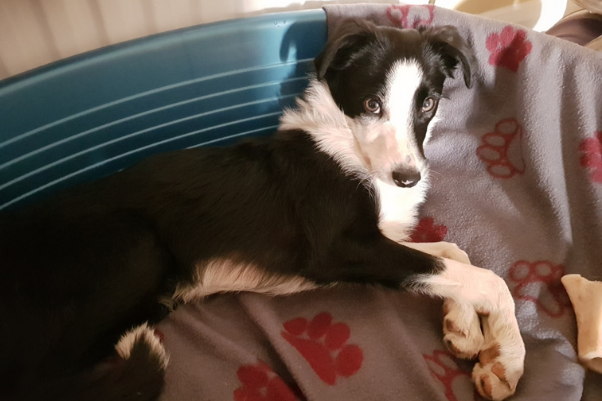
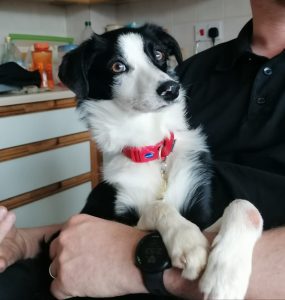
Wilbur was a smart, gentle and very funny puppy. He adored cuddles; he just loved being loved. He was very clever, learning his name and toilet training quickly. He liked playing football for hours in the evenings and loved his chew toys. I’m a registered childminder, so he would come into contact with lots of adults and children and he loved meeting new people. He was a very sociable and friendly dog.
How did Wilbur come into your life?
My family had been asking for a dog for the past twenty years, but work commitments made this tricky for my husband and me. When we went into lockdown in 2020, I finally said yes. Life is short and I felt it was the right time for my family as the children were in their teens and so they could help look after a new dog. My husband and me were also working more flexibly so we’d be able to make sure a dog always had someone with them. We decided to get a puppy because we found that local rescues were reluctant to adopt to us due to us having children in the house as part of my work.
We saw Wilbur advertised online in October 2020 and got in contact with the seller via video chat. They said we couldn’t go to see him because of covid. They said they were the owners of his parents and had bred from them both before without any issues. They seemed like dog lovers and they sent us a further video and photo via WhatsApp. I used to message them a few times a week to check how he was doing and to show them how we were preparing for his arrival.
Wilbur was from a litter of six and he was the last one to be chosen. The breeder told us his parents were both Collie-westie-shihtzu mixes. I’d had crossbreeds as a child and had always found them to live long, healthy lives so I was reassured that his parents were a mixture of breeds.
He was named Wilbur by my youngest son, and it suited him perfectly. We were all very excited for when he could finally come home. We sent the breeders packages for him and the other pups and they seemed so friendly; we couldn’t believe our luck. We’d started to plan for long walks, camping trips, puppy playdates, and lots of other fun things we wanted to do with him. Later on, this sadly turned into Wilbur’s bucket list.
We collected Wilbur in December 2020. The seller told us they couldn’t get him vaccinated, flead, wormed or health checked because vets were closed due to covid. We agreed to do those things as we wanted our own vet to check him over. When we went to pick him up, he had terrible eye stains and smelt really bad. He had a crooked little face and a big pot belly, but the rest of his body was thin with very long legs. He was so small and we asked if he had been the runt in the litter. In the photos we’d seen of him, he looked like he was going to be quite broad. The breeder said he was the smallest; little did we know at the time but dogs with sensory neuropathy usually are the smallest in the litter. He cried the entire ride home but as soon as he went inside our house he was straight to exploring and settled brilliantly. We took him to the vet a couple days later and they were not overly concerned at the time. However, I had a gut feeling that something wasn’t right.
What happened to him?
By the New Year, we noticed he was chewing an awful lot. He seemed too young to be teething, so we considered his diet, the bath and laundry soaps we use, and any other possible irritants. However, his back legs were still very thin. He also had a tendency to stand on bent paws without seeming to notice. In late January after a play in the snow, Wilbur slipped coming inside and we saw there was a problem with his back leg. We rang our vet immediately and they referred him to a hospital with suspected spinal issues. He was then further referred to a specialist, who suspected sensory neuropathy (SN). This is an incurable disease that affects the nerves and gets progressively worse. Dogs with the condition usually don’t make it to their second birthday.
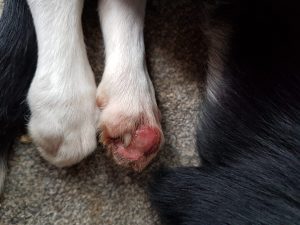
By February, his condition was starting to worsen. We waited for a diagnosis and were expecting a positive result for SN. His paws were getting worse from self-mutilation and his back legs were becoming thinner and more bent. We tried bandages, cones, and even baby socks to try to stop him from chewing himself, as well as trying to distract him with toys and treats. But he just kept chewing his back paw red raw. At night we had to put a cone on him, which was horrible. We even had a video monitor to watch him in the night because sometimes he would manage to get the cone off. He also started to need to go out to toilet more as he was starting to lose control of his bodily functions. It was very distressing.
Sadly, his test results did come back positive for sensory neuropathy. We were told differing things about how long he might have, but I didn’t expect him to see his first birthday as he was deteriorating so rapidly. We spoke to multiple vets and tried everything, including different medications. We even called universities to ask about new research, but with no luck. Looking after Wilbur became a full-time job and sadly some of the medication caused upsetting side effects. During his many vet visits, staff would always comment on what a lovely dog he was. They also questioned what we’d been told about his breed.
I researched anything and everything about sensory neuropathy. I also went back to the specialist who diagnosed Wilbur and they advised that we scale back Wilbur’s treatment and make the most of our time with him as the condition has no cure. In June 2021, we decided it was time to say goodbye. By this time, Wilbur had no quality of life and the sparkle had gone out of his eyes. He was struggling to walk, eat and go to the toilet. When we let him go, he was just eight months old. He’d been with us only 189 days.
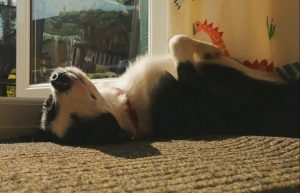
The day we said goodbye it rained a downpour. The five of us made the journey together, each having one last cuddle before my eldest son and my husband took him inside to the vets. We decided to bring him home and we laid him to rest in the garden. It was his happiest place, where he’d play football and fetch for hours. We have created a memorial in the garden with wildflowers. We have his photos everywhere and we talk about him every day. The children I mind ask if he can come back; they miss him, too. Wilbur wasn’t just our pup. He was theirs too.
How did his sensory neuropathy (SN) affect Wilbur?
Wilbur experienced multiple signs and symptoms due to SN. The first thing we noticed was him chewing at his paws. He also used to stand with his back paws bent and didn’t seem to notice or feel pain. He also had very little muscle tone in his back legs. Later, as his condition worsened, he started to lose control of his ability to toilet and he’d regurgitate food. Because he would chew at his feet, he was also prone to getting infections. This got worse the more the disease progressed as he started to get weaker, which led to him dragging his feet, causing more sores.
What impact has going through this had on you and your family?
The day we had to say goodbye to Wilbur was one of the worst of my life. I found it heart breaking having to explain to my children it was time to let their precious puppy go. The emotional impact has been awful as Wilbur was a member of our family. It’s impacted us all emotionally. There was also a high financial cost to caring for Wilbur.
However, I’ve been determined to see something positive come from Wilbur’s short life. I set up a group called WilburPuppy#189 and I’ve written to local newspapers, vets, universities, groomers, dog walkers, kennels, pet shops and the owners of Wilbur’s littermates to try to raise awareness. Sensory neuropathy is a rare but devastating condition. I’ve since heard from others who have had similar experiences and I want to understand if it’s more common than we actually think it is.
As well as raising awareness, we’ve also been raising funds for the Blue Cross; they have an excellent pet bereavement service that I accessed after Wilbur passed. I’ve also been fundraising for a cancer charity as I lost loved ones whilst caring for Wilbur. The children I mind have got involved by creating posters. We’ve created key rings, badges, cards, and leaflets to hand out in the local community. We’ve also had tombolas, raffles, plant sales. We want everyone to know Wilbur’s story.
What would you like to see change?
I’d like there to be more awareness about this devastating condition, particularly amongst Border collie owners and breeders. I’d also like Border collie breeders to do the responsible thing and health test dogs used for breeding for SN to help avoid other families going through the same heartache. Dogs with the gene shouldn’t be bred from.
Based on your experience, what would your advice be for other prospective dog owners?
Hindsight is a bitter thing and looking back, I could have done things differently. As it was during the pandemic, we didn’t meet Wilbur until the day we collected him to take him home. We accepted everything the breeders told us and we didn’t question the fact there was no paperwork or evidence of health screening. I think I was too trusting.
My advice would be to do your research and talk to other dog owners. Ask for recommendations of good, responsible breeders or visit a rescue centre. If you do choose a breeder, visit them in person and ask about health screening. Ask them about the health risks associated with the breed, too.
How can people help raise awareness of Wilbur’s story?
We need people to be more aware of SN, so please share Wilbur’s story with everyone from vets to groomers to pet shops. If you know a friend or family member is thinking about getting a dog, ask if they know about SN. You can find out more by joining our Facebook Group or by getting in touch with me directly (Sarah’s details are available on request).
We also need to do more to understand how common the condition is. SN is thought to be extremely rare, but we need more people to come forward if they’ve had experiences of it. It can be extremely difficult to talk about, as I know. Losing Wilbur has impacted my mental and emotional wellbeing. But we need to understand this condition more so that it doesn’t happen to other dogs and their families. If you have had an experience with SN, please get in touch with me.