21/08/25
In April, we asked our supporters to send in questions for two of Ukraine’s incredible animal rescue teams: Animal Rescue Kharkiv and the Step shelter in Brody. Thank you so much for your curiosity, compassion, and solidarity with Ukraine’s vulnerable animals and their rescuers, which shone through in every message we received.
These responses are directly from the people on the ground – the dedicated people who risk their lives daily to save dogs, cats, and other animals caught in the crossfire of war.
ANIMAL RESCUE KHARKIV (ARK) carries out dangerous frontline evacuations and provides urgent medical care to the animals they rescue. This fantastic organisation runs a veterinary clinic, three rescue centres and an adoption programme. In 2024 alone, ARK helped 8,364 animal victims of war.
(Thanks to our supporters, Naturewatch Foundation supplies ARK with much-needed resources, including funding for surgeries, medication, and humane catching equipment.)
“How do you manage to help rescue injured and traumatised animals? Also, how do you find homes for them?” From Conor
“This is actually one of the most difficult and energy-consuming tasks we face. Such rescues involve several stages.
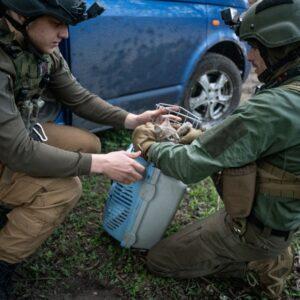
The first stage is locating and catching the animal. Sometimes, due to pain or fear, the animal runs away.
The next step is transportation – getting the animal to a location where it can receive medical care. Sometimes, the animal is in such critical condition that it cannot be transported until stabilised, so we have to find local veterinarians or volunteers who can help on-site.
The next stage is treatment itself. In 2022, our team established a social clinic where we treat all the rescued animals. The clinic is fully funded by donations. It is at the clinic where the true fight for the animal’s life begins. This includes examinations, diagnostics, treatments, surgeries, care – and most importantly, restoring the animal’s trust in people and its will to live.
 One of the biggest challenges we face is that many animals, having lost their owners and homes due to the war, also lose their sense of purpose. They often refuse to eat or show any desire to live at all. That’s why one of the core responsibilities of our clinic staff is to help the animal believe that life is still worth living – that they are needed, that they will have a family again. That’s how we manage to save them.
As for finding them new homes – we post about them on social media, on various platforms, and we cooperate with volunteers, shelters, and organisations in different countries. This gives the animals a real chance to find a new forever home.”
“Can you describe one of the most memorable rescues you’ve been involved in?” From Alice
“For me, the most unforgettable rescue I took part in was in the village of Serebryanka, located right on the border between the Luhansk and Donetsk regions.
It was a village without a single remaining resident, perched on a high point – completely exposed, like an open palm to the Russians. That meant you couldn’t stand still, sit in a car, or even enter the village without serious risk.
The request came from our soldiers, who were rotating out and relocating their positions. All the cats who had survived in that village came to them. The soldiers couldn’t take them along, but they couldn’t bear the thought of leaving them behind to die either.
The front line was just two kilometres away.
There was no real road left – just a churned-up mess of mud. Everything around was grey. No communications. No stores. The sound of shelling echoed constantly.
The mood among the soldiers was mixed. One didn’t believe we’d ever come. The other believed right up to the last moment.
When Oleksandr met us with a wide smile, we still had no idea what was ahead.
The soldiers gently began bringing out their ‘combat cats’ – companions who had been with them through the hardest days. Some of the cats were concussed. One had a torn ear from a blast.
And then, in their hands, the soldiers carried out tiny newborn kittens. That was deeply moving – amid the chaos and destruction, they had taken care of newborns.
Before we left, the soldiers gave our girls a huge bouquet of tulips. In that place, under those circumstances, it felt absolutely unreal.”
“How do you keep yourself strong in such a difficult situation?” From Johnathan
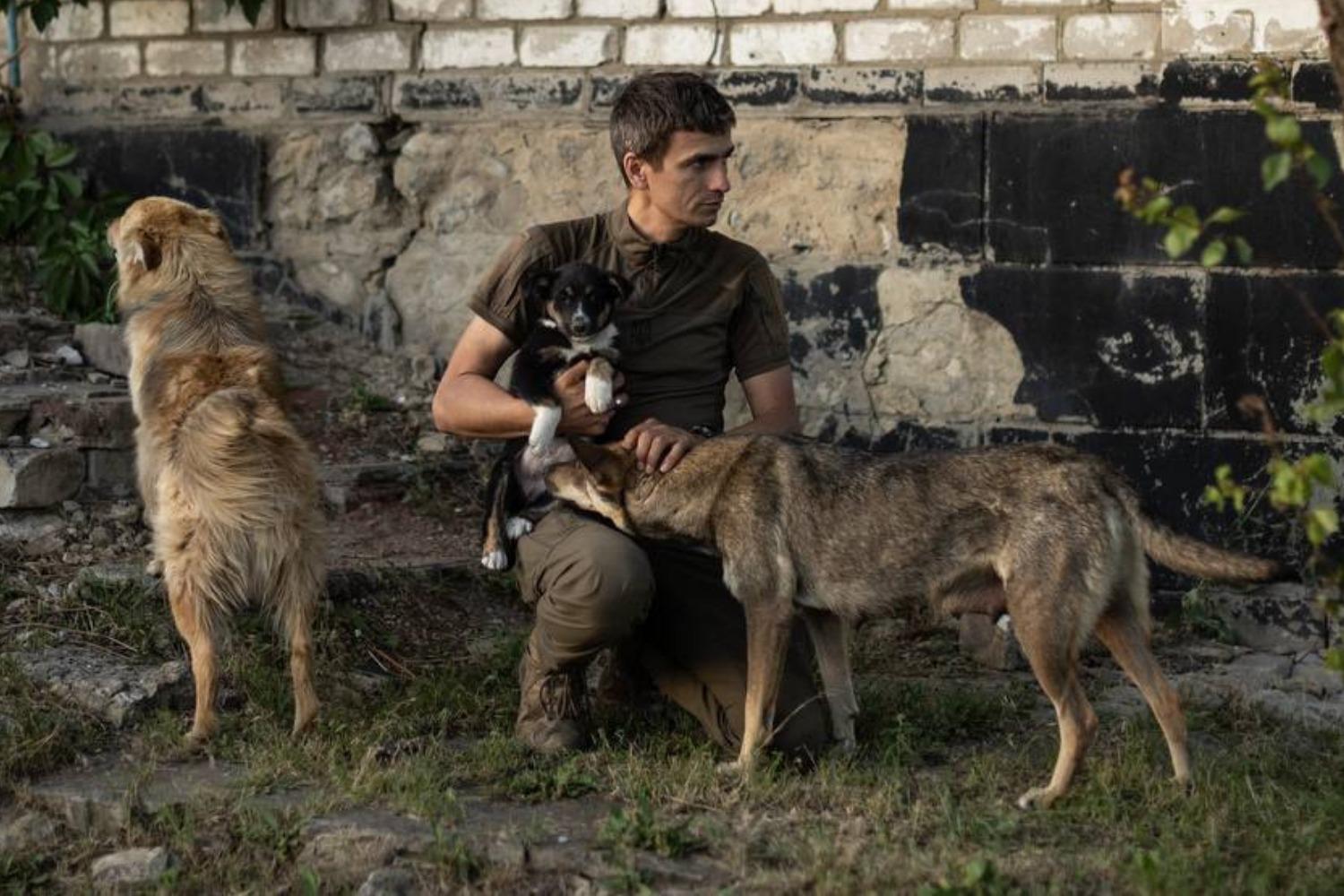
“Jonathan, it’s a lot like being a parent – you may feel overwhelmed, exhausted, even in pain, and you might say, ‘I can’t do this anymore’. But then you remember that a small life depends on you. And so, you get up and keep doing what needs to be done.
It’s the same here. For the sake of someone else, you find the strength to carry on.”
“I would like to know if it is just since this terrible war started your organisation has been helping dogs, or have you been doing this wonderful work for many years? All the best.” From Sylvia
“Sylvia, we’ve been helping animals for over 15 years.
As the official organisation, Rescue of Animals Kharkiv, we’ve been saving animals since 2016.”
“Is there a typical volunteer?” From Joan
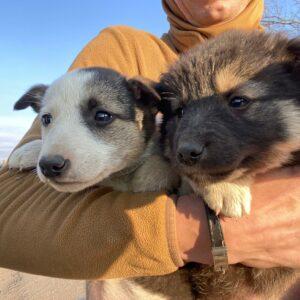 “Joan, I’m not sure if a ‘typical’ volunteer exists, since every person is different – but I do know that the spirit of volunteering is universal.
At its core lies a very pure and sincere desire to serve for the benefit of someone or something. It’s a kind of self-giving for the sake of good.
In Ukraine today, volunteering has become the driving force behind many aspects of life. It’s this selflessness and willingness to help that has sparked numerous changes across the country – especially in people’s awareness and mindset.”
“Firstly, a huge thank you for saving these vulnerable creatures. War cannot be explained – one day they are safe, the next homeless and alone. You are the kindest of people. Question: How do you manage to get these poor souls the veterinary support they need?” From Linda
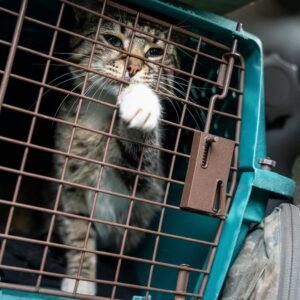 “Linda, thank you so much for your kind words. Every day, we make tremendous efforts to ensure that the animals receive all the medical care they need.
This includes sourcing medicines, veterinary supplies, anesthesia, and therapeutic food; working with foreign veterinarians; analysing illnesses; and constantly seeking new solutions so that every animal has a real chance at recovery and survival.
Of course, none of this would be possible without the people who support us and donate.”
“Can you tell us if you’ve had a particularly difficult rescue or what the hardest one was? Thank you for your amazing work!” From Catherine
“We’ve had many complex and genuinely dangerous rescue missions. One of the most difficult ones we remember was in Kolisnykivka, in the Kupiansk direction.There was an abandoned farm in the village where many animals had already died. Later, we found out that a person who had been caring for them had also died there. At the time of the rescue, there were three semi-wild horses and seven dogs left on the farm.
The difficulty of the operation came from several factors:
- The farm was extremely close to Russian positions. They could easily monitor movement around and on the farm using drones. A small forest was all that separated the farm from Russian forces.
- The horses were untrained, feral, and the dogs were terrified, avoiding all human contact.
- The horses had been released into the field near the farm.
That meant the operation couldn’t be completed in one go. We had to carefully time our approach – entering and exiting under cover of dusk.
On this mission, we were joined by a soldier who had originally asked us to help rescue the horses, two horse handlers, and two journalists.
The first time we went in, we spent half a day capturing the dogs using tranquilisers because they wouldn’t come near us. We managed to take one horse and drive two others into a barn where we secured them so they couldn’t escape – this way, we could come back later to get them.
When we returned on a different day, early in the morning, to complete the second part of the mission, Russian forces spotted our group and hit the vehicle belonging to soldier Yevhen with a drone strike. The car, which he had arrived in with the journalists, was completely destroyed – along with all his military documents and personal belongings.
Even after that, the hardest part remained: sedating the horses and loading them into the trailer. This took over four hours. The team had to wait until dusk again to safely exit the area and leave together in a single vehicle.
In the end, the operation was a success. The animals are alive and well.”
“How do you stay safe while working in such dangerous conditions?” From Alice
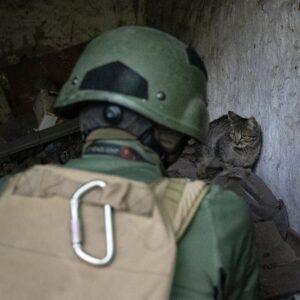 “Alice, the truth is – we are not safe.
Each of us is under threat. A missile or drone can strike anywhere in our country at any time. So, in the current context, ‘safety’ is a very relative concept.
When our rescuers go into high-risk zones or to the front lines, they rely not only on protective gear, but also heavily on intuition.
Out there, listening to your instincts is crucial – and it can truly save lives.”
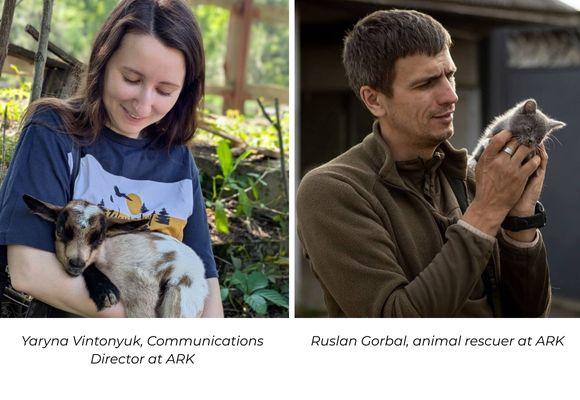
We would like to sincerely thank Yaryna and Ruslan for taking the time to answer our supporters’ questions.
While news coverage may have moved on, the situation for animals in Ukraine was still critical at the time of this interview. ARK’s animal rescue heroes continue to work under immense pressure – navigating missile strikes, landmines, destroyed infrastructure, and limited veterinary resources – to give defenceless animals the best chance of survival. Please join us in keeping them in your thoughts.
Sharing your messages
As well as questions for the interview, we also received some wonderful messages of admiration and support, which have been passed on to Animal Rescue Kharkiv and the Step shelter.
- “You are doing a magnificent job helping animals in such horrendous circumstances.”
- “You will be well rewarded for what you do.”
- “Just tell them thank you with a big kiss.”
- “I don’t have a question – I just want to thank these brave men and women for all they do.
- “They are the true heroes of this world.”
- “Glory to Ukraine.”
- “I pray you and the precious animals stay safe, and I pray for a Ukraine victory.”
What can YOU do?
- Read our supporters’ interview with the Step shelter in Brody, Ukraine.
- Find out what we’re doing to help animals in Eastern Europe.
- Follow us on social media or share this interview on your own channels!
- Join our mailing list for updates.
- Please donate to help fund our work, which includes supporting Ukraine’s courageous animal welfare organisations.
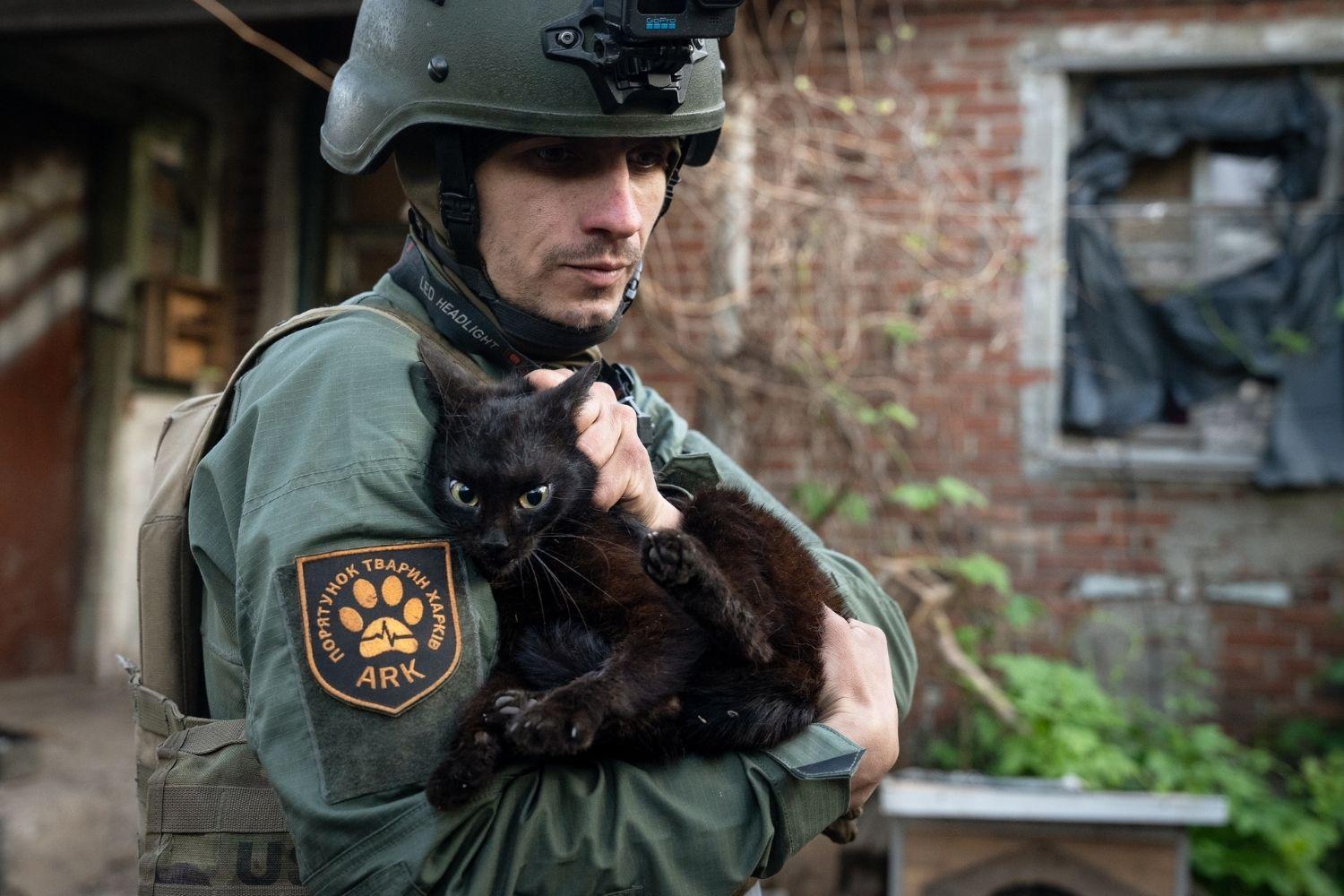
(All images have been kindly provided by Animal Rescue Kharkiv.)