21/08/25
Back in April, we invited our supporters to share questions for two remarkable animal rescue groups in Ukraine: the Step shelter in Brody and Animal Rescue Kharkiv. The empathy expressed in your messages meant the world – your support for both the animals and their rescuers was clear.
Below, you’ll find first-hand answers from the heroes themselves – people who work tirelessly with limited resources to protect and care for animals impacted by the conflict.
THE STEP SHELTER in Brody, Ukraine isn’t on the frontline, but they still experience the impact of the war. Manager Oksana Chorniy and her dedicated team have long supported stray and displaced animals. The shelter provides the best care possible in challenging circumstances, leads spay and neuter initiatives in nearby villages, and helps educate children about animal welfare through interactive tours. They find new homes for between 10 and 30 animals every month.
(Thanks to our supporters, Naturewatch Foundation has provided the Step shelter with the funding to build ‘Naturewatch Street’ – 16 insulated doghouses with enclosures, which will house the most vulnerable animals, including mothers with puppies and injured dogs.)
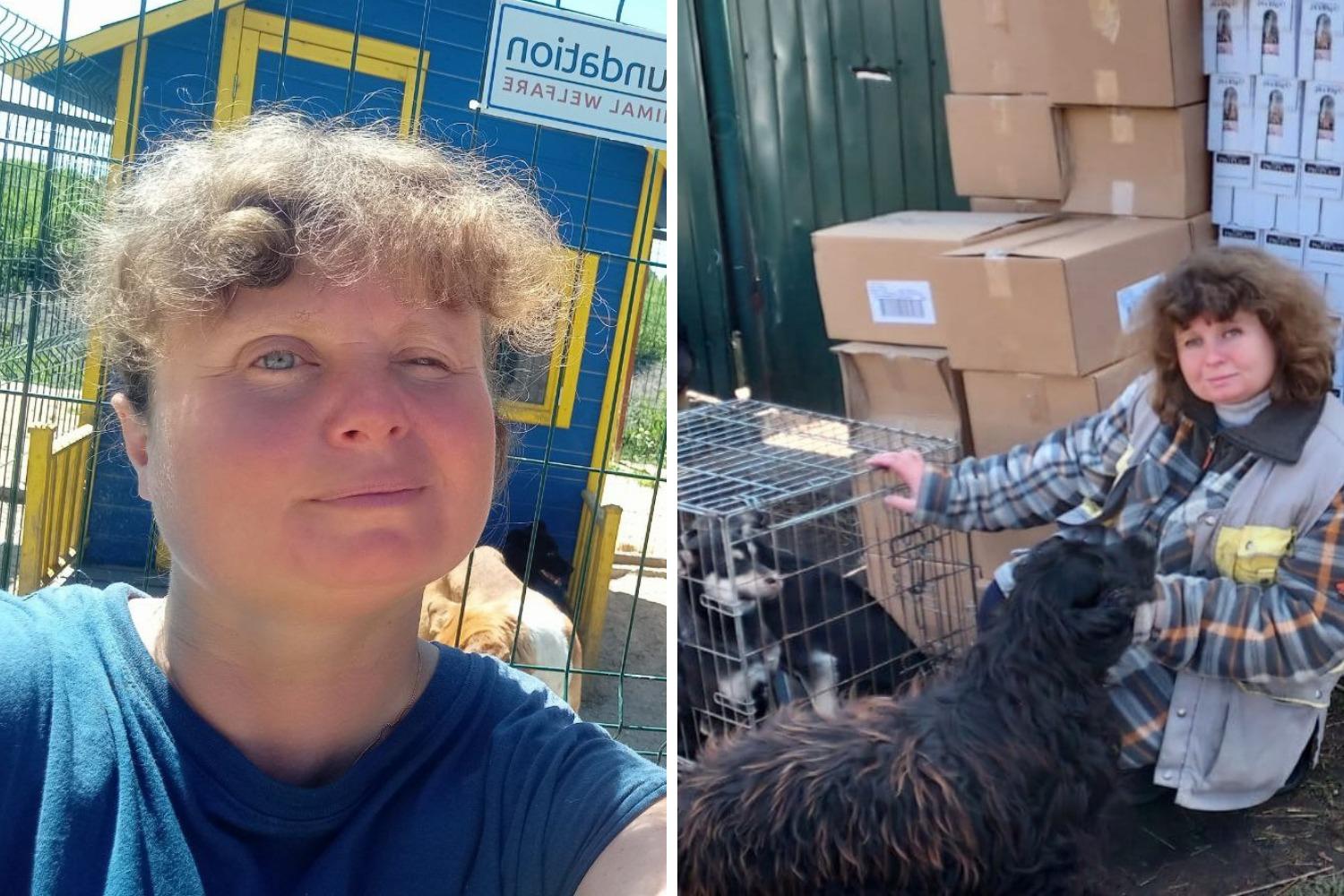
“Do the rescuers ever manage to get animals back with their original owners or are the animals put with a loving foster family?” From Sue
“Animals come to us from the streets (captured as strays), after the death of their owners, due to owners leaving the country, being removed from neglectful or abusive homes, from soldiers who’ve gone to war, or retired from military service. Many are also surrendered by their owners or evacuated from active combat zones.
We do our best to find new families for every single animal.”
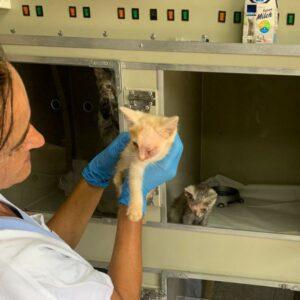 “How long does the shelter keep the animals before rehoming them – is it a long process? Do the animals have to be assessed to make sure they are not too traumatised before being placed with new owners?” From Nicola
“There is no fixed length of stay at our shelter. If the animal is healthy, it receives all necessary vaccinations, deworming and flea treatment, is spayed or neutered, and then rehomed.
This entire process can take as little as 10 days.”
“How difficult is it to find new homes for rescued animals, and do some of them end up living with their rescuers?” From Sheila
“Yes, some animals stay with us permanently – mainly those that were severely injured in accidents or survivors of abuse.
Every month we find new homes for between 10 and 30 animals.”
“What spurs you on to do what you do?” From Maggie
“First and foremost, we’re inspired by the animals themselves. Creating an animal shelter was my childhood dream. When I was young, I experienced deep emotional trauma watching a vehicle drive through our town shooting stray animals. The sound of gunshots and dogs screaming was horrific.
 Now, we try to change people’s attitudes toward animals through our own example.
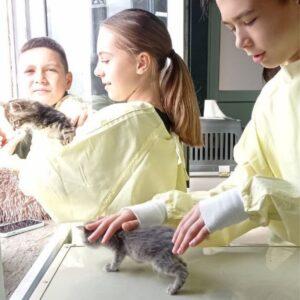
Lessons in kindness shouldn’t be taught in classrooms, but in shelters. But for this, a shelter must provide animals with dignified living conditions – so that children grow up knowing animals deserve homes, not cages or chains.
We were taught as children that a dog is a person’s best friend.
But no one ever told us that you don’t lock up your friends or chain them for life.”
“What does a typical day look like for you?” From Alice
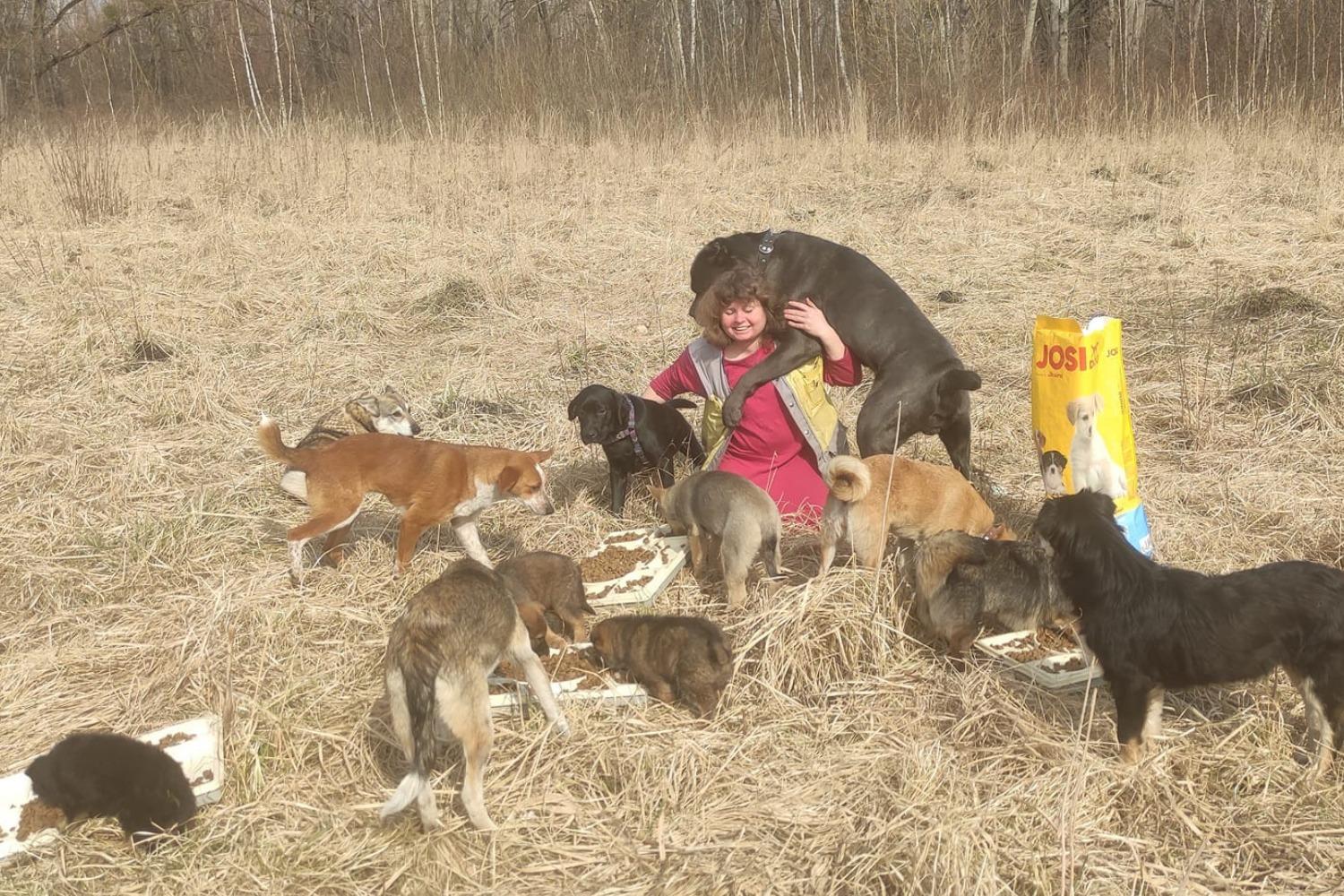
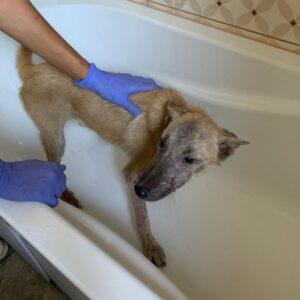 “Our day begins with checking on all the animals to make sure they’re okay after the night. Then we clean their spaces, give them fresh water, and start preparing warm meals (usually porridge or pasta with meat). In winter, they eat more, so we give dry food in the morning and warm food in the evening.
Throughout the day, there’s still a lot to do – construction and improvement of the shelter (like mowing the grass), caring for sick animals, treatments and vaccinations for new arrivals, trips to capture strays, transport to new adoptive homes, and food deliveries.
There’s always more to be done – especially since we care not only for dogs and cats, but also pigs, goats, horses, and a sheep.
And we also have two storks living with us!”
We would like to sincerely thank Oksana for taking the time to answer our supporters’ questions.
Although headlines have shifted elsewhere, animals in Ukraine were still facing a dire situation when Oksana answered these questions. The interest from our supporters gave her an opportunity to share Step’s experiences, their struggles, and their hopes for the future. We hope her responses will reassure you, move you – and renew your commitment to helping Ukraine’s most vulnerable animals.
Sharing your messages
As well as questions for the interview, we also received some wonderful messages of admiration and support, which have been passed on to the Step shelter and Animal Rescue Kharkiv.
- “You are doing a magnificent job helping animals in such horrendous circumstances.”
- “You will be well rewarded for what you do.”
- “Just tell them thank you with a big kiss.”
- “I don’t have a question – I just want to thank these brave men and women for all they do.
- “They are the true heroes of this world.”
- “Glory to Ukraine.”
- “I pray you and the precious animals stay safe, and I pray for a Ukraine victory.”
What can YOU do?
- Read our supporters’ interview with Animal Rescue Kharkiv.
- Find out what we’re doing to help animals in Eastern Europe.
- Follow us on social media or share this interview on your own channels!
- Join our mailing list for updates.
- Please donate to help fund our work, which includes supporting Ukraine’s courageous animal welfare organisations.
(All images have been kindly provided by the Step shelter.)